Everything riders need to plan a motorcycle trip in Ladakh: how bike rental in Leh works, choosing the right bike, the best routes from easy loops to Umling La, gear, fuel and riding safely at altitude.
For many riders, Ladakh is the ultimate motorcycle destination: high passes, empty roads, river valleys and desert plateaus. It is also demanding, with thin air, rough roads and few services. This guide explains how Ladakh bike rental works in Leh, how to choose a bike, which routes suit different riders, and how to stay safe.
Should you rent in Leh or ride in?
There are two main approaches:
- Fly or drive to Leh and rent there: you acclimatise first, then ride loops from Leh.
- Ride in from Manali or Srinagar: on your own bike or one rented outside Ladakh.
Rules on bikes rented outside Ladakh being used within the region have changed over the years. Check before you plan.
How Ladakh bike rental works
Leh has many rental shops, mainly around Main Bazaar, Fort Road and Changspa. Rental arrangements are usually straightforward:
- Documents: a valid driving licence that covers motorcycles, ID, and sometimes a security deposit.
- Inspection: check the bike before you leave and photograph any existing damage.
- Agreement: read the rental agreement and carry a copy; checkpoints may ask for it.
- Inclusions: ask whether a helmet, tool kit and spare parts are included.
- Breakdowns: ask what happens if the bike breaks down in a remote area.
- Permits: the bike number may need to be on your permit.
Choosing a bike
| Type | Good for | Consider |
|---|---|---|
| Classic 350/500 cruisers | Comfortable, widely available, easy to repair | Heavy; older carburetted models lose power at altitude |
| Adventure tourers (e.g. Himalayan) | Rough roads, water crossings, long trips | Taller seat height |
| Smaller bikes | Lighter, easier to handle | Less power on steep climbs with luggage |
Choose a bike you are already comfortable riding. Ladakh is not the place to learn a new machine.
Best bike trip in Ladakh: routes by experience
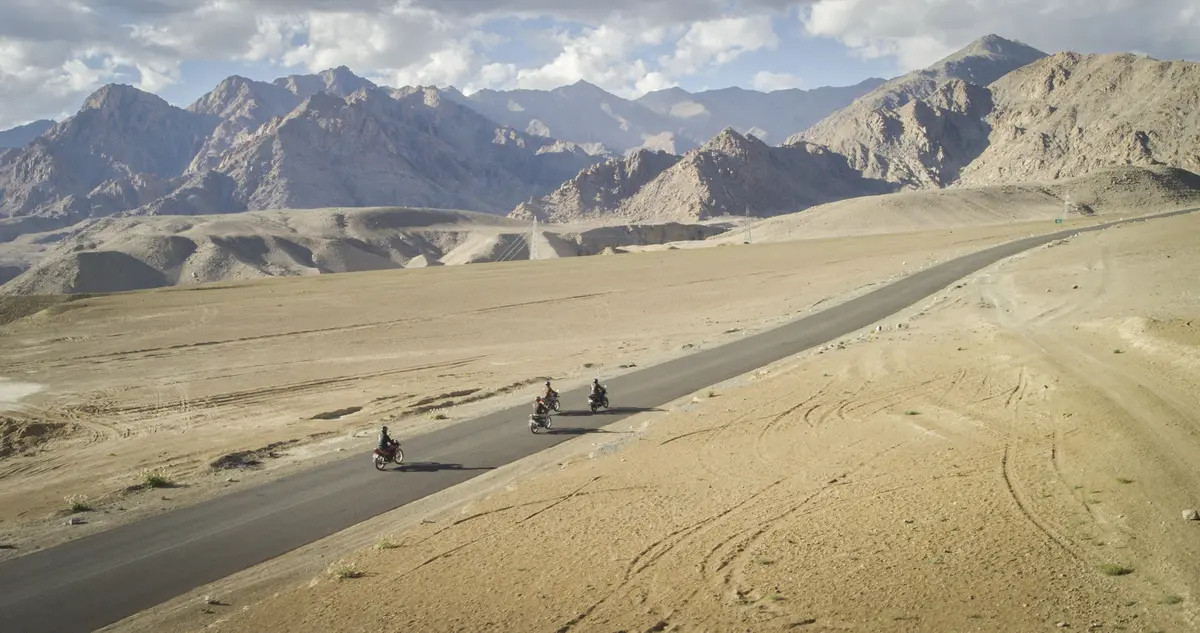
There is no single "best bike trip in Ladakh" – it depends on your experience and how much time you have. Here are the main routes, from easier to more demanding.
Leh and Indus valley loops (easy)
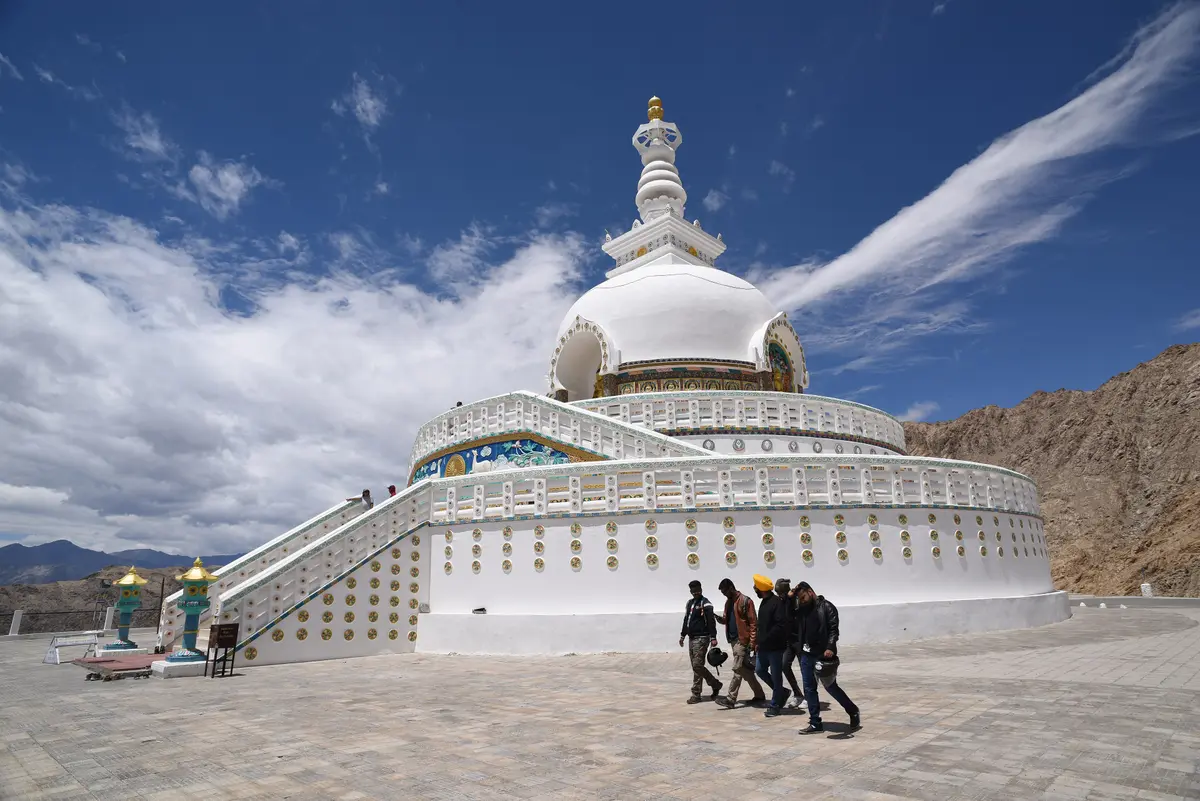
Shey, Thiksey, Hemis, Magnetic Hill and the Sangam. Good for your first rides after acclimatising. See our Leh sightseeing guide.
Leh–Khardung La–Nubra (moderate)
A classic first big ride. Steep climb, cold summit, long descent into Nubra. See our Nubra Valley guide.
Leh–Pangong (moderate)
Over Chang La with rough patches and water crossings. See the Pangong Lake guide.
Nubra–Pangong via Shyok (challenging)
Remote road with water crossings; ride only when conditions are good. See Nubra to Pangong via Shyok.
Srinagar–Leh (moderate)
A gradual climb through Zojila, Kargil and Lamayuru. See our Srinagar to Leh bike trip guide.
Manali–Leh (challenging)
High passes, long stages and few services. See the Manali–Sarchu–Leh bike trip guide and our existing Manali to Leh by bike article.
Hanle and Umling La (very challenging)
Extreme altitude, remote roads and strict permits. Only for experienced, well-acclimatised riders. See our Umling La travel guide.
A sample Leh-based riding plan
| Day | Ride |
|---|---|
| 1–2 | Arrive in Leh, rest, collect and check the bike |
| 3 | Short loop: Shey, Thiksey, Hemis and back |
| 4 | Leh → Khardung La → Hunder |
| 5 | Hunder → Turtuk → Hunder |
| 6 | Hunder → Shyok route → Pangong (if open) |
| 7 | Pangong → Chang La → Leh |
| 8 | Buffer day, return the bike |
This plan builds up gradually from easy rides to longer, higher days, and keeps a spare day for weather or repairs.
Daily bike checks
- Tyres: pressure and tread; look for cuts after rough sections.
- Chain: tension and lubrication, especially after water crossings and dust.
- Brakes: pads and levers; test before setting off.
- Lights and horn: both essential on mountain roads.
- Fluids: engine oil level and any leaks.
- Luggage: straps tight and nothing hanging near the chain or exhaust.
If the bike breaks down
- Move off the road to a safe spot, away from bends.
- Check the simple things first: fuel, kill switch, loose cables, a flat tyre.
- Call your rental shop if you have network; they may know a mechanic nearby or arrange recovery.
- Flag down a passing truck or tempo if the bike cannot be repaired – drivers often help riders.
- Never leave a rider alone on a remote road; stay together until help arrives.
Riding etiquette
- Give way to army convoys and heavy vehicles on narrow sections.
- Use your horn before blind corners, not to rush other road users.
- Keep noise down in villages and near monasteries; avoid loud exhausts.
- Do not ride on sand dunes, meadows or lakeshores.
- Greet other riders – the riding community in Ladakh is friendly and helpful.
Riding with a support vehicle
A support vehicle carries luggage, spare parts and fuel, and gives tired or unwell riders somewhere to rest. It also makes it easier to bring along a non-riding partner or friend. If you ride independently, consider hiring a taxi as backup on the most remote stretches, such as the Shyok road or the eastern Ladakh circuit. Whether a particular guided trip includes a support vehicle depends on the package – check the inclusions listed on its page.
Riding gear
- Full-face or modular helmet
- Armoured riding jacket and trousers
- Riding gloves (and warm winter gloves for passes)
- Waterproof riding boots
- Thermal base layers and a fleece mid-layer
- Rain gear or waterproof covers
- Buff or balaclava for dust and cold
See our Ladakh packing list for more.
Navigation and communication
Download offline maps before leaving Leh, as mobile data is unavailable for long stretches. Note distances between fuel stops and overnight halts on paper as a backup. Agree on regrouping points with your riding partners, since you will often lose sight of each other on winding roads.
Fuel planning
Fuel stations are limited outside Leh and Kargil. Always:
- Fill up at every opportunity.
- Carry spare fuel in an approved container on long routes.
- Calculate distances between pumps before each ride.
Riding safely at altitude
- Acclimatise before long rides: spend at least two nights in Leh first.
- Start early: passes and water crossings are easier in the morning.
- Water crossings: check depth, choose your line, stay in a low gear and keep a steady throttle.
- Gravel and sand: stay relaxed and avoid sudden braking.
- Hairpins: ride wide, give way to trucks and use your horn on blind corners.
- Do not ride at night.
- Hydrate and eat: riding at altitude is tiring.
- Insurance: check that your travel insurance covers motorcycling at high altitude.
Riding with a pillion in Ladakh
Two-up riding is common in Ladakh, but it makes rough sections, water crossings and steep hairpins harder. Choose a bike with enough power and comfortable pillion seating, keep luggage light and well balanced, and plan shorter days. On very rough stretches or deep water crossings, it can be safer for the pillion to walk across. Make sure your pillion has the same protective gear and warm layers as you.
When to ride
The riding season usually runs from June to September. See our best time to visit Leh Ladakh guide for the best time for a Ladakh bike trip.
Guided bike trips
A guided trip with a mechanic and support vehicle reduces the logistics and risk. Tripsdoc's Leh to Leh Bike Trip 6 Days, Manali Leh Bike Trip and Srinagar Leh Bike Trip pages list their routes and inclusions. If you are starting from Delhi, see our existing Delhi to Leh bike trip article.
Final thoughts
A Ladakh bike trip is unforgettable when it is planned well. Rent a bike you know, acclimatise first, plan fuel carefully and never let a schedule push you into riding in unsafe conditions. For help with your plans, contact Tripsdoc.
Photo credits (Wikimedia Commons): Chris Hunkeler from Carlsbad, California, USA (CC BY-SA 2.0), Ville Hyvönen (CC BY-SA 2.0), Chris Hunkeler (CC BY-SA 2.0).
Frequently Asked Questions
There have been restrictions and disputes over bikes rented outside Ladakh being used for sightseeing within the region. Rules change, so check the current position with local authorities or rental operators before planning to ride an outside rental bike.
Yes. Ladakh's roads include steep gradients, gravel, water crossings and thin air. You should be comfortable riding a heavy motorcycle on rough roads before attempting long routes.
Riding in a small group, ideally with a support vehicle, is safer on remote routes. If anything goes wrong, help may be hours away.