A guide to Ladakh's most rewarding villages and lesser-visited places – from Alchi, Likir and Hemis Shukpachan to Turtuk, Hanle, Karzok and Chiktan – with tips on homestays and travelling responsibly.
Ladakh's best-known sights – Pangong, Nubra and Khardung La – draw most visitors. But some of the region's most memorable experiences happen in its villages: sharing butter tea in a family kitchen, walking between barley fields and apricot orchards, or finding an ancient temple with no one else around. This guide covers the best villages in Ladakh and a few hidden places in Ladakh worth seeking out.
Why visit Ladakh's villages?
- Culture: see daily life, farming and traditions up close.
- Slower pace: village time is calm and unhurried.
- Supporting communities: homestays and local purchases keep income in the village.
- Lower altitude options: several villages are lower than Leh and good for gentle days.
Villages along the Indus (Srinagar highway)
Alchi
Alchi is known for its temple complex with some of the oldest surviving Buddhist murals in Ladakh. Unlike most monasteries, it sits on the valley floor among fields and apricot trees. The village has guesthouses and cafés, making it a pleasant overnight stop.
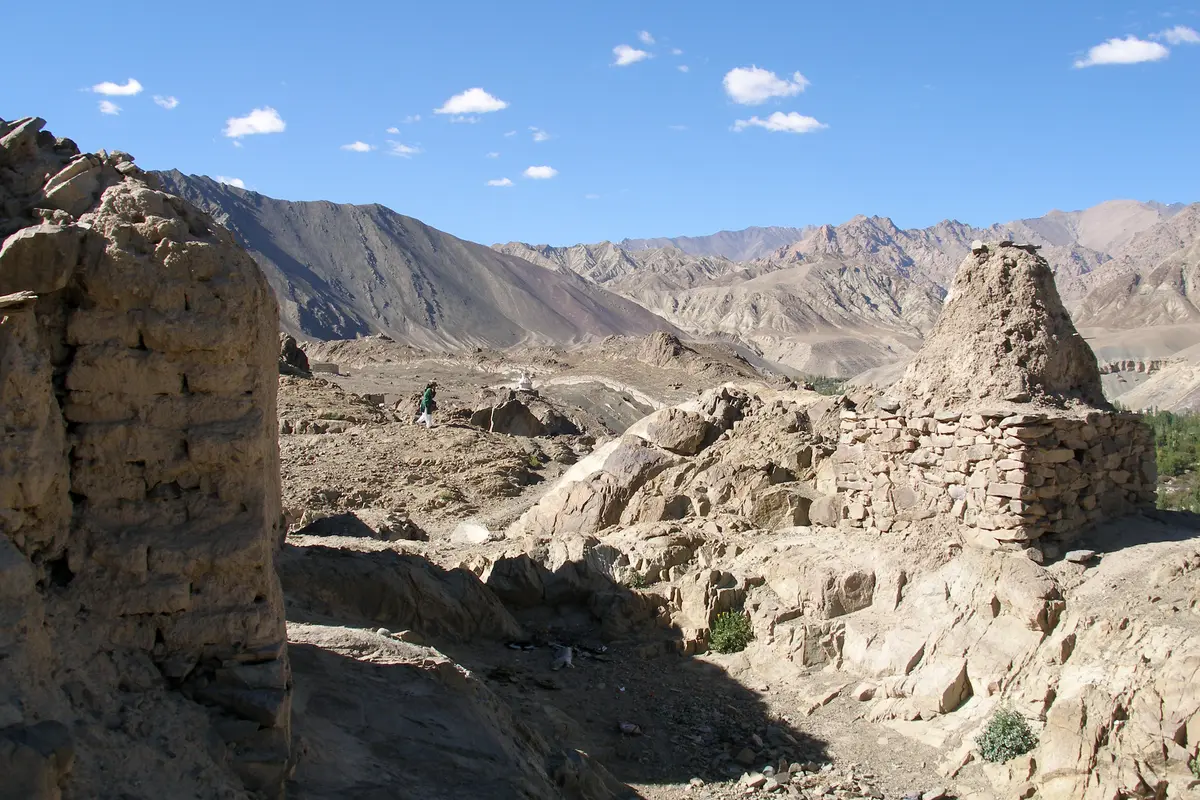
Likir
Likir sits in a side valley above the Indus, with a monastery and a large golden Maitreya statue. It is the starting point for village walks to Yangthang and Hemis Shukpachan.
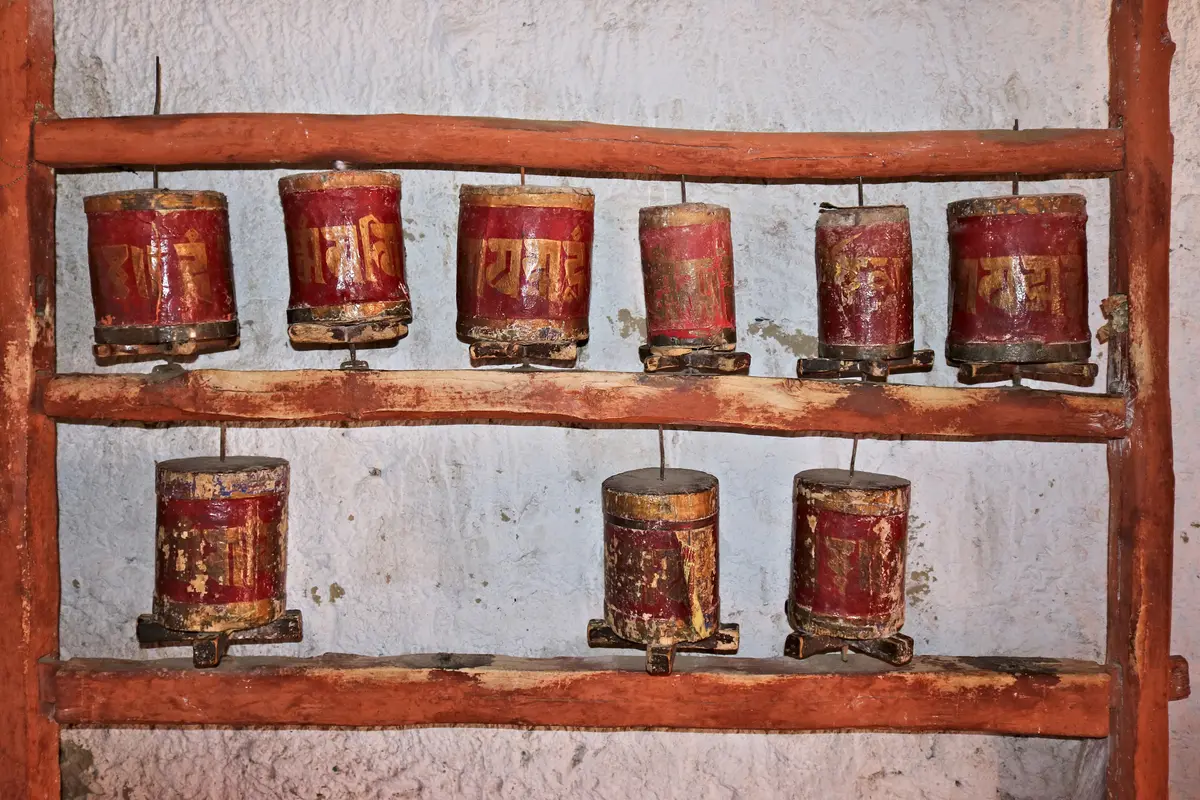
Hemis Shukpachan
Hemis Shukpachan is a village known for its juniper grove, fields and quiet atmosphere. It is a lovely place to stay with a family and walk between neighbouring villages. Not to be confused with Hemis monastery, which is south-east of Leh.
Yangthang
A small village between Likir and Hemis Shukpachan, set among fields with views of the surrounding ridges. Walkers often stop here on the village trail, and homestays make it a peaceful overnight stop.
Ulley
Ulley is a tiny, high village above the Sham valley, known for its wildlife. In winter, it has become a base for guided snow leopard and urial watching, while in summer it offers quiet walks and wide views.
Basgo and Saspol
Basgo has the ruins of a historic fort and temples on a ridge, while Saspol has cave paintings above the village. Both are easy stops on the highway.
Dah and Hanu
In the lower Indus valley, Dah and the Hanu villages are home to a distinct community known for their traditions and dress. These villages are in a protected area and may need a permit. Visit respectfully and always ask before photographing people.
Villages in Nubra
Turtuk
The Balti village of Turtuk, at the far end of the Shyok road, is one of the most distinctive places in Ladakh. See our Turtuk travel guide.
Sumur and Panamik
Along the Nubra river, Sumur has a peaceful monastery and green fields, while Panamik has hot springs. Both see fewer visitors than Hunder and Diskit.
Hunder
Beyond the dunes, Hunder village has orchards, old houses and walking paths. Stay a night and explore early in the morning, before the day's visitors arrive, when the only sounds are irrigation streams and birds in the poplars.
Villages in eastern Ladakh
Hanle
A quiet village of scattered hamlets in a wide valley, with a hilltop monastery and some of the darkest skies in India. See our Hanle travel guide.
Karzok
The village on the shore of Tso Moriri, home to Changpa herders. See our Tso Moriri travel guide.
Man and Merak
Quieter villages further along the shore of Pangong, with homestays and wide lake views.
Hidden places in the west
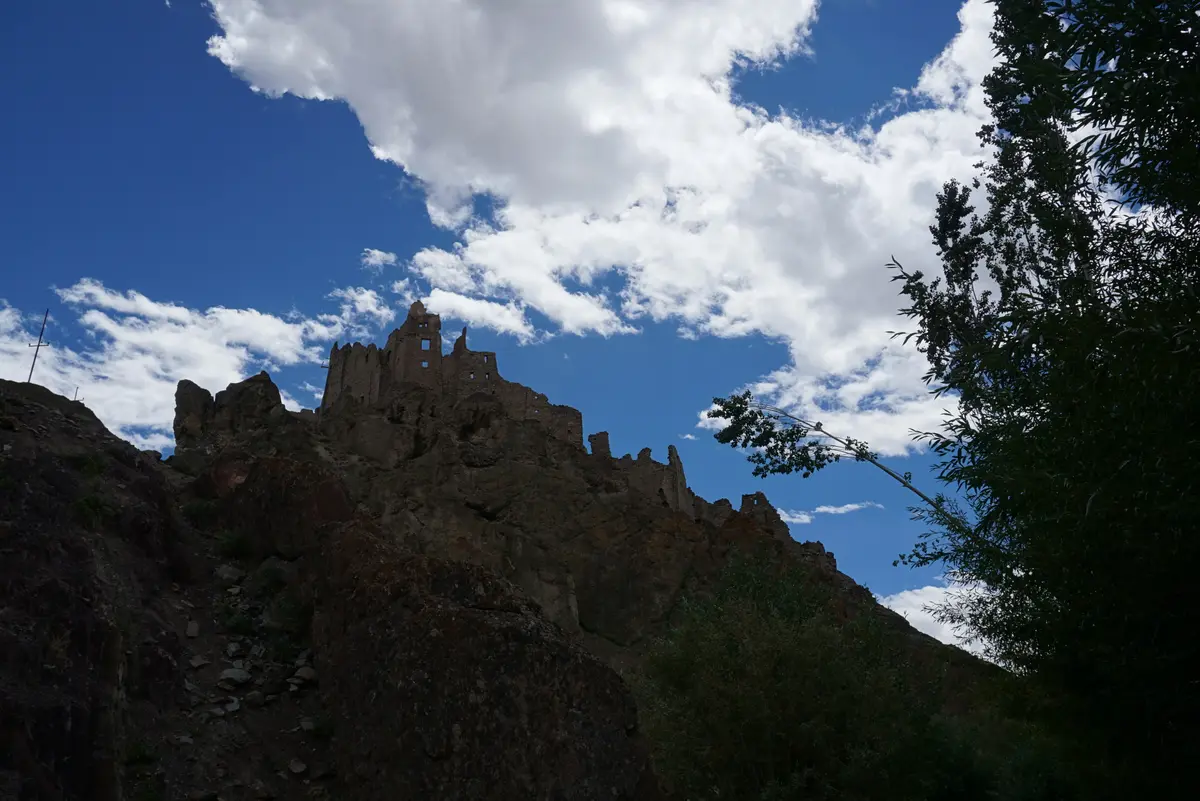
Chiktan
Between Kargil and Lamayuru, Chiktan has the ruins of a historic castle (Chiktan Khar) on a rocky outcrop. It is off the main highway and sees few visitors.
Mulbekh and the Wakha valley
Beyond the famous rock-cut Maitreya, the villages of the Wakha valley are worth a short walk. See our monasteries guide.
Drass and the villages near Kargil
The area around Kargil has villages in the Suru valley and near Drass that see few tourists. See our Lamayuru to Kargil road guide.
Choosing a village by interest
| If you enjoy… | Consider |
|---|---|
| Ancient art and temples | Alchi, Saspol, Basgo |
| Gentle walks between villages | Likir, Yangthang, Hemis Shukpachan |
| A different culture and cuisine | Turtuk |
| Lakes and nomadic life | Karzok, Man and Merak |
| Night skies | Hanle |
| History off the beaten track | Chiktan, Basgo |
The village year
Life in Ladakh's villages follows the seasons. In spring, families plough and sow barley and wheat, and irrigation channels are cleaned and opened. Summer brings green fields, grazing animals in the high pastures and the apricot harvest in lower villages. Autumn is harvest time, with threshing and storing for the long winter. In winter, when the roads close and temperatures plunge, villages turn inwards: families gather around the stove, and festivals and weddings bring communities together. Visiting at different times of year shows you very different sides of village life.
A 4-day village itinerary from Leh
| Day | Plan | Overnight |
|---|---|---|
| 1 | Leh → Basgo → Likir; afternoon walk around Likir | Likir homestay |
| 2 | Walk or drive via Yangthang to Hemis Shukpachan | Hemis Shukpachan homestay |
| 3 | Drive to Alchi via Saspol; explore the temples | Alchi guesthouse |
| 4 | Return to Leh via the Sangam and Magnetic Hill | Leh |
This gentle loop stays at or below Leh's altitude, needs no long drives and is a good way to spend acclimatisation days productively. The walking sections can be shortened or replaced by short drives.
Getting to the villages
- Taxi: the simplest option; agree the route and waiting time in advance.
- Local buses: some villages have bus services from Leh, but schedules are limited.
- On foot: village trails link several Sham valley villages – go with a local guide if you are unsure of the route.
- Self-drive or bike: roads to the main villages are generally good, but side roads can be narrow.
Hidden places beyond villages
- Tso Kar: a smaller salt lake on the Changthang plateau, quieter than Pangong and Tso Moriri, popular with birdwatchers.
- Hemis National Park: a protected area south of Leh with wildlife, villages and trekking routes.
- Zanskar: a remote region reached via Kargil and the Suru valley, or by road from Lahaul, with monasteries such as Karsha and Phugtal. It needs several days on its own.
- Panamik hot springs: on the Nubra river side of the valley, easily added to a Nubra trip.
Some of these places involve long drives or high altitudes; plan them as part of a longer trip rather than a quick detour.
Homestay tips
- Expect simplicity: rooms are clean but basic; bathrooms may be shared or dry toilets.
- Eat with the family: meals are part of the experience.
- Save water: water is precious in a desert region.
- Bring a small gift or buy local produce – but avoid giving sweets or money to children.
- Respect routines: families start early and work hard, especially at harvest.
What a homestay day looks like
Days in a village homestay start early. You might wake to the sound of the family milking cows or lighting the stove, and breakfast is often bread with butter or apricot jam and a cup of tea. Many travellers spend the morning walking between fields or to a nearby monastery, return for lunch, and rest in the afternoon. In the evening, the family kitchen – usually the warmest room in the house – becomes the centre of the home, with dinner of rice, dal and vegetables or local dishes such as skyu and thukpa. Conversations, even with limited shared language, are often the highlight of the stay.
Photography in villages
- Always ask before photographing people; a smile and a gesture usually work.
- Respect a "no" without argument, and avoid photographing children without a parent's permission.
- Do not enter homes, courtyards or fields to take pictures without being invited.
- Consider sharing photos with your hosts – many families appreciate a printed or digital copy.
Responsible travel
- Ask permission before photographing people and homes.
- Dress modestly.
- Stay on paths through fields.
- Carry your rubbish back to Leh.
- Avoid single-use plastic; use refillable bottles.
Best time to visit Ladakh's villages
Each season shows a different side of village life. Late spring brings ploughing and blossom on apricot trees in the lower villages. Summer is green, with fields full of barley and peas, and is the easiest time to travel. Early autumn brings harvest, golden poplars and clear skies – many visitors' favourite time. Winter is quiet and very cold, with roads to some villages difficult; it suits travellers interested in wildlife, such as snow leopard watching around Ulley and Rumbak, and who are prepared for freezing temperatures. See our best time to visit Leh Ladakh guide for more.
Combining villages with the classic highlights
You do not have to choose between villages and the famous sights. A night in Alchi or Likir fits easily into the drive from Kargil to Leh; a night in Turtuk adds depth to a Nubra trip; and a homestay at Man or Merak replaces a busier camp at Pangong. Even one village night can change how you remember Ladakh.
Plan a village route
Villages along the Srinagar highway combine well with the drive from Kargil. Eastern villages fit into longer circuits; see our tour combinations guide. For a couple-friendly slow trip, see the couple trip guide.
To include villages in your plans, browse Tripsdoc's Leh Ladakh packages or contact Tripsdoc for a custom route.
Final thoughts
Ladakh's villages show a side of the region that the big viewpoints cannot: the work, faith, food and hospitality that have sustained life in this high desert for centuries. Slow down, stay with a family, walk the fields and leave room in your plans for the unexpected.
Photo credits (Wikimedia Commons): Vyacheslav Argenberg (CC BY 4.0), Ingo Mehling (CC BY-SA 3.0), Deepank Ranka (CC BY-SA 4.0).
Frequently Asked Questions
Villages along the Srinagar highway, such as Alchi, Likir, Basgo and Saspol, are easy to reach on day trips from Leh and do not usually require permits.
In popular villages during peak season, booking ahead is wise. In smaller villages, homestays are often arranged on arrival or through local contacts.
Stay in locally owned homestays, buy local produce, ask before taking photographs, dress modestly, use water sparingly and carry your rubbish back to Leh.