A one-way Delhi to Leh road trip planner: how the Manali and Srinagar routes compare, approximate distances and driving days, how to handle the plains section, where to stop overnight, car preparation and how to get home once you reach Leh.
A Delhi to Leh road trip takes you from the plains of north India to the cold desert of Ladakh, crossing some of the highest roads in the world. The first decision is the route: through Manali or through Jammu and Srinagar. Each has its own season, scenery and challenges. In this guide I compare both, suggest how to break the drive, explain how to handle the plains section and prepare your car, and cover the options for getting home. Distances and times are approximate; road works and new bypasses change them often.
Delhi to Leh road trip: two routes compared
| Via Manali | Via Srinagar | |
|---|---|---|
| Approx. distance | 950–1,000 km | 1,000–1,050 km |
| Driving days | 4–5 | 5–6 |
| Key towns | Chandigarh, Mandi, Manali, Jispa | Jammu, Srinagar, Sonamarg, Kargil |
| Highest point | Tanglang La, about 5,300 m | Fotu La, about 4,100 m |
| Season (approx.) | June to early October | April or May to November |
| Character | Wild, high and remote | Greener, more towns, gradual climb |
Many people drive one route to Leh and return by the other; our Delhi to Leh complete road trip guide covers that full loop. Here we focus on the one-way drive.
Route 1: Delhi to Leh via Manali
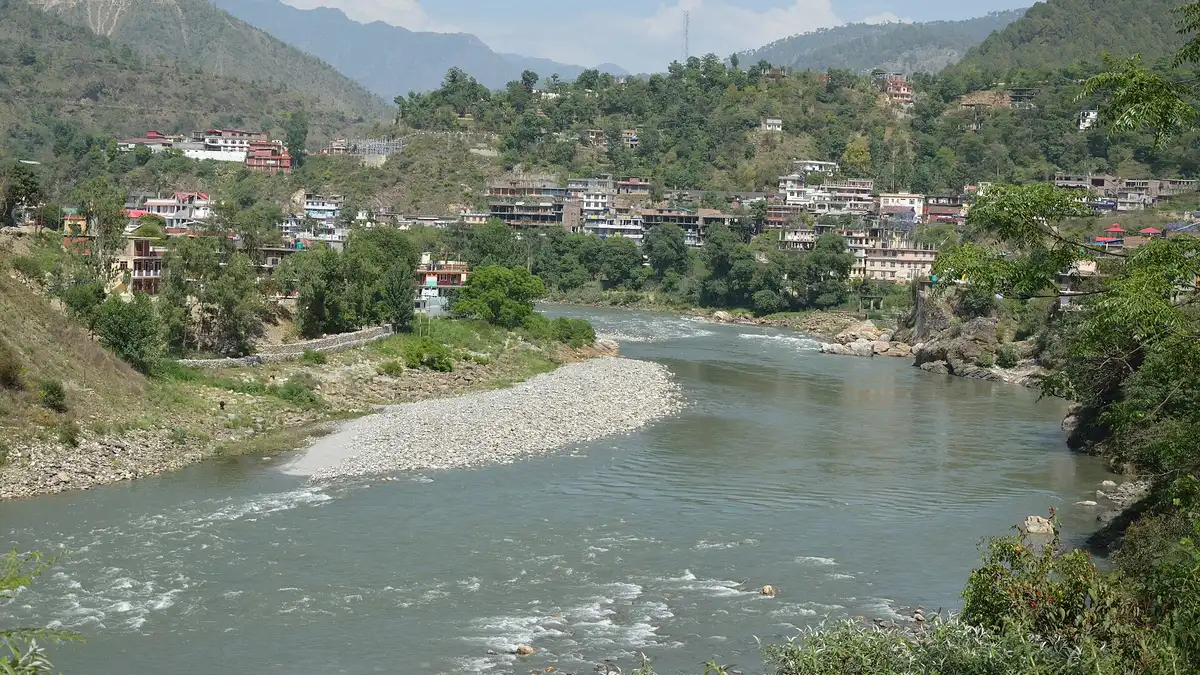
Delhi to Manali (about 530–550 km)
Leave Delhi before dawn to beat city traffic. The highway runs through Sonipat, Karnal and Ambala to Chandigarh, then on to Kiratpur, Bilaspur and Mandi, where the hills begin in earnest. The four-lane road and tunnels have cut journey times, but the stretch between Mandi and Kullu along the Beas can still slow down with traffic and monsoon landslides. Most drivers take 11–14 hours. Breaking the trip at Mandi or Kullu makes it easier.
Manali to Leh (about 425–430 km)
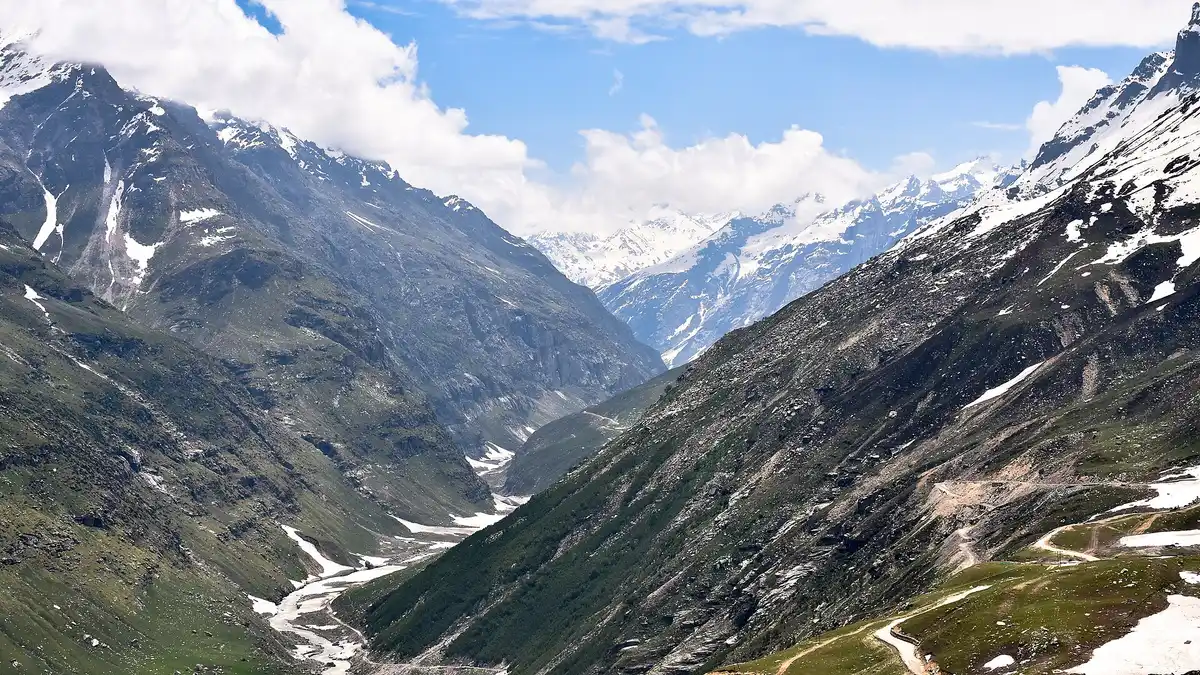
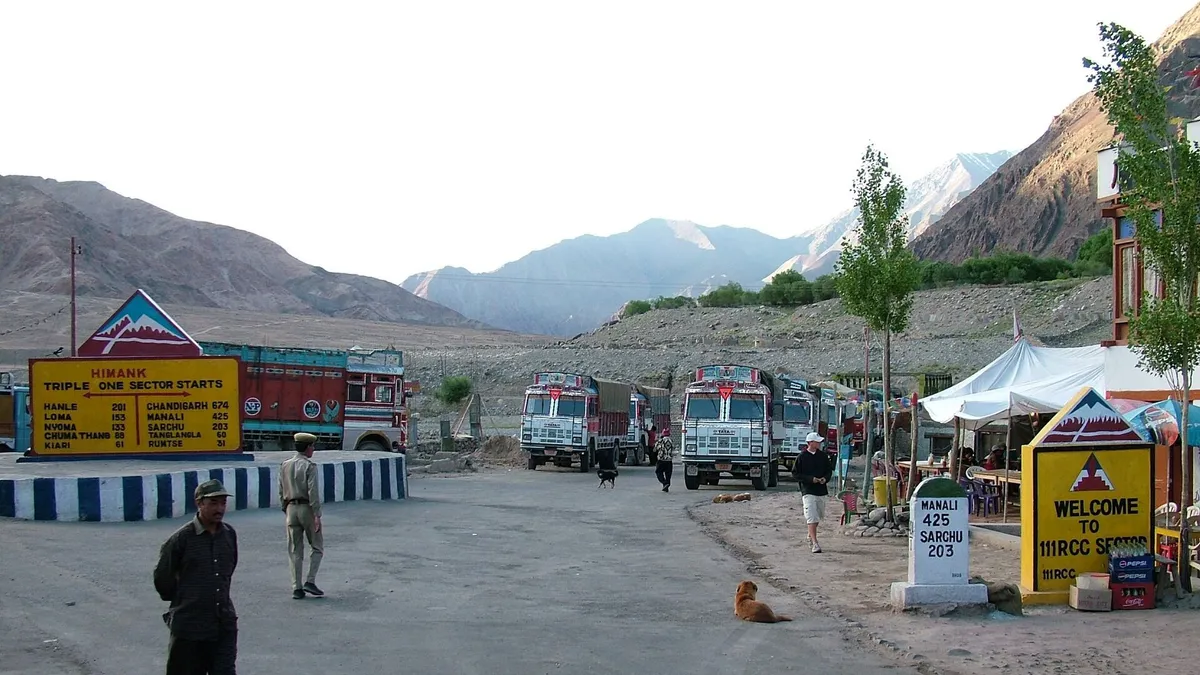
From Manali, the road crosses the Atal Tunnel into Lahaul, then climbs over Baralacha La, Nakee La, Lachulung La and Tanglang La. Take two days with a night at Jispa or Keylong. Fill fuel at Tandi; the next reliable pump is near Karu. Read our Manali Leh road condition guide for stretch-wise details before you go.
Sample plan via Manali
- Day 1: Delhi to Mandi or Kullu.
- Day 2: Kullu to Manali; rest and vehicle check.
- Day 3: Manali to Jispa.
- Day 4: Jispa to Leh.
- Day 5: Rest in Leh.
Route 2: Delhi to Leh via Jammu and Srinagar
Delhi to Srinagar (about 800–850 km)
This route heads through Haryana and Punjab to Pathankot and Jammu, then climbs to Srinagar through the Banihal area with its new tunnels. Most drivers take two days with a night in Jammu or near Udhampur. Traffic, weather and convoy movement can cause delays, so keep timings flexible.
Srinagar to Leh (about 420 km)
From Srinagar the road passes Sonamarg, crosses Zoji La into Drass and Kargil, then climbs Namika La and Fotu La before descending through Lamayuru to the Indus valley and Leh. Two days with a night in Kargil is the classic pace. Our Srinagar Leh road trip guide covers this section in detail.
Sample plan via Srinagar
- Day 1: Delhi to Jammu.
- Day 2: Jammu to Srinagar.
- Day 3: Srinagar rest or Sonamarg.
- Day 4: Sonamarg to Kargil over Zoji La.
- Day 5: Kargil to Leh.
- Day 6: Rest in Leh.
Self-drive or hire a driver?
Self-driving gives total freedom and is the classic way to do a Delhi to Leh road trip, but it demands confidence on narrow hill roads, experience with gravel and water crossings, and the stamina to drive 8–10 hours a day for several days at altitude. If only one person in the group can drive, the fatigue adds up quickly.
Hiring a car with an experienced driver from Delhi, Chandigarh or Manali takes that load off. Local drivers know where the road is bad, how checkpoints work and which dhabas are reliable. It costs more, but it lets everyone enjoy the views and arrive in Leh less exhausted. A popular middle path is to self-drive the plains and hand over to a hired mountain driver from Manali or Srinagar onwards.
Who should not self-drive
If you have never driven in the hills, struggle with steep hairpins or tire easily on long drives, take a driver. The same applies if anyone in the group has health concerns that may need a quick change of plan.
Driving the plains section well
People prepare carefully for the mountains and then exhaust themselves on day one. The plains are long, hot and busy. Start early, share driving if you can, stop every two hours, keep the AC moderate and eat light. Use FASTag for tolls. Avoid overtaking trucks on curvy hill roads after Bilaspur or Udhampur, and never drive tired after dark on the hill sections. Fuel up whenever the tank drops to half, even on the plains, so you never have to hunt for a pump at night.
Preparing your car
- Service the car before leaving Delhi: brakes, clutch, coolant, oil and filters.
- Good tyres with tread, a full-size spare and a working jack.
- Tow rope, tyre inflator, basic tools and a first-aid kit.
- Copies of registration, insurance, pollution certificate and your licence.
- Approved jerry cans if your fuel range is short for the Manali–Leh stretch.
SUVs and MUVs are best, but well-maintained hatchbacks and sedans can make it in dry months with careful driving.
Best time and altitude safety
Via Srinagar, the season usually starts in April or May; via Manali, around June. July and August bring monsoon trouble on the Himachal and Jammu sides. September is ideal for a Delhi to Leh road trip on either route. Pack layers, sunglasses, sunscreen and a medical kit. Carry cash and a postpaid SIM. On the way up, drink plenty of water, sleep at lower halts, avoid alcohol and descend if headaches or breathlessness get worse. Consult your doctor before travel if you have health conditions.
Getting home from Leh
If you drove your own car, you will need to drive it back, usually by the other route to see something new. If you hired a car with driver, you can simply fly from Leh to Delhi. A mixed plan, drive up and fly back, is popular with people who want the journey without doubling it. For transport options, permits and packing, see our Delhi to Leh travel guide.
Mistakes to avoid
- Driving Delhi to Manali and Manali to Jispa on consecutive long days without rest.
- Choosing the Manali route in late May without confirming that it is open.
- Skipping the Tandi fuel stop.
- Not keeping a buffer day for landslides or convoy holds.
- Doing Khardung La the day after arriving in Leh.
Why plan your road trip with Tripsdoc
We help self-drivers with route choice, halts, permits and live road updates, and we provide experienced drivers and vehicles for those who would rather sit back. Every plan includes buffer days and halts at sensible altitudes. If you are driving yourself, we can still book the tricky stays at Jispa, Sarchu, Kargil or Pangong and send you route notes before each day.
Conclusion
A Delhi to Leh road trip is one of India's great journeys. Choose Manali for drama and altitude, or Srinagar for a gentler climb and more towns, then drive in short, early stages and rest well in Leh. To plan your route, halts and vehicle, explore our Leh Ladakh tour packages or contact Tripsdoc.
Photo credits (Wikimedia Commons): Biswarup Ganguly (CC BY 3.0), Timothy Gonsalves (CC BY-SA 4.0), Beefy SAFC (CC BY-SA 3.0).
Frequently Asked Questions
Via Chandigarh, Manali and the Atal Tunnel the distance is roughly 950–1,000 km. Via Jammu, Srinagar and Kargil it is roughly 1,000–1,050 km. Exact numbers depend on bypasses and diversions. Time matters more than distance on this trip: plan 4–5 days via Manali and 5–6 days via Srinagar.
Yes, many drivers do it in 11–14 hours with an early start, thanks to expressways and the four-lane road to Mandi and Kullu. It is tiring, though, and you will need a rest morning in Manali. Splitting the drive with a night in Chandigarh, Mandi or Kullu is more comfortable, especially with children.
Yes. Toll plazas on the national highways out of Delhi, through Haryana, Punjab and Himachal, and on the Jammu side use FASTag. Without it you may pay a higher cash toll. Recharge it before you leave and keep a little cash for parking, local fees and the occasional manual barrier.
The highway north of Delhi has many large dhabas and food courts, especially around Murthal and Karnal, popular for parathas and quick meals. Further on, there are clean highway restaurants near Ambala and Zirakpur. Eat light before long drives to avoid drowsiness, and keep water and snacks in the car.
In early June the Srinagar route is often more dependable because it usually opens earlier, while the Manali route may still have heavy snow and slush near the passes. By mid to late June both are generally open. Check opening status close to your dates and choose the route that is running reliably.
The road has improved greatly with new tunnels and four-lane sections, and families drive it regularly. Traffic can be heavy, with occasional closures for landslides, weather or convoy movement. Start early, follow local advisories, and keep a buffer day. Many travellers fly from Delhi to Srinagar to save this leg.
Driving your own car one way and flying back means someone must drive it home later, which is rarely practical. Most self-drivers either complete a loop back to Delhi or hire a car and driver for the one-way trip. If you must leave a car, discuss secure parking or transport arrangements well in advance.
In June, July and August most drivers manage without chains because the passes are cleared. In late May, early June or October, fresh snow is possible and chains can help on slippery stretches near the passes. Carry them if you travel at the edges of the season and learn to fit them before you go.
Charging infrastructure is growing in towns like Chandigarh, Manali and Srinagar, but there are very long stretches between Lahaul and Leh, or Kargil and Leh, with little or no reliable charging. Cold weather and climbs also reduce range. For now, an EV trip needs detailed charging research and is best left to experienced owners.
Not from Delhi. Fuel is available at many points along the plains and in the hills. The only long gap is on the Manali–Leh section, from Tandi to Karu, roughly 365 km. Buy approved jerry cans and fill them at Tandi if your car's range is short. The Srinagar route has fuel at Kargil.