A practical Srinagar Leh sightseeing checklist: every major stop from Dal Lake to the Hall of Fame, how long to spend at each, the best time of day to visit, what to combine and what to skip when you are short of time.
Much of the joy of Kashmir-to-Ladakh travel happens between the start and the finish. Srinagar Leh sightseeing covers lakes and gardens, a famous pass, two war memorials, a rock-cut Buddha, thousand-year-old temples and a river confluence, all within about 420–435 km. This checklist goes stop by stop with how long to spend, the best time of day and what to skip if you are short of time, so you can plan your stops realistically.
Srinagar Leh sightseeing checklist
| Stop | What to see | Time needed | Best time |
|---|---|---|---|
| Srinagar | Dal Lake, Mughal gardens, Hazratbal | Half day | Late afternoon and sunset |
| Sonamarg | Meadows, Thajiwas area | 1–3 hours | Morning |
| Zojila War Memorial | 1948 operations memorial | 20–30 min | Morning |
| Drass | Kargil War Memorial | About 1 hour | Late morning |
| Kargil | Bazaar, riverside, museum | Evening | Evening |
| Mulbekh | Rock-cut Maitreya statue | 20–40 min | Morning |
| Lamayuru | Monastery and Moonland | 1 hour or overnight | Sunset or sunrise |
| Alchi | Ancient temple complex and murals | 1–2 hours | Midday |
| Likir and Basgo | Monastery, Maitreya, ruined fort | 1 hour each | Afternoon |
| Nimmu | Indus–Zanskar confluence | 20–40 min | Afternoon |
| Near Leh | Magnetic Hill, Pathar Sahib, Hall of Fame | 1.5–2 hours | Afternoon |
To arrange these stops into day-wise plans of 6, 9 or 12 days, see our Srinagar Leh itinerary guide.
Kashmir side: Srinagar and Sonamarg
Srinagar
Start with a shikara ride on Dal Lake, ideally in the late afternoon when the light softens over the houseboats and floating gardens. The Mughal gardens at Nishat and Shalimar are terraced along the lake's eastern shore, and the white Hazratbal shrine stands on the northern bank. Half a day is enough for the highlights before an early start the next morning.
Sonamarg
About 80 km from Srinagar along the Sind river, Sonamarg is a broad meadow town surrounded by forested slopes and glaciers. Stop for breakfast and a short walk, or stay the night and explore the Thajiwas area. This is your last taste of green Kashmir before the high desert.
Crossing into Ladakh: Zojila and Drass
Zojila War Memorial
On the Ladakh side of Zojila, a memorial recalls the 1948 operations in which tanks were taken over the pass, an achievement that helped secure the road to Ladakh. It is a short, worthwhile stop with displays and a statue.
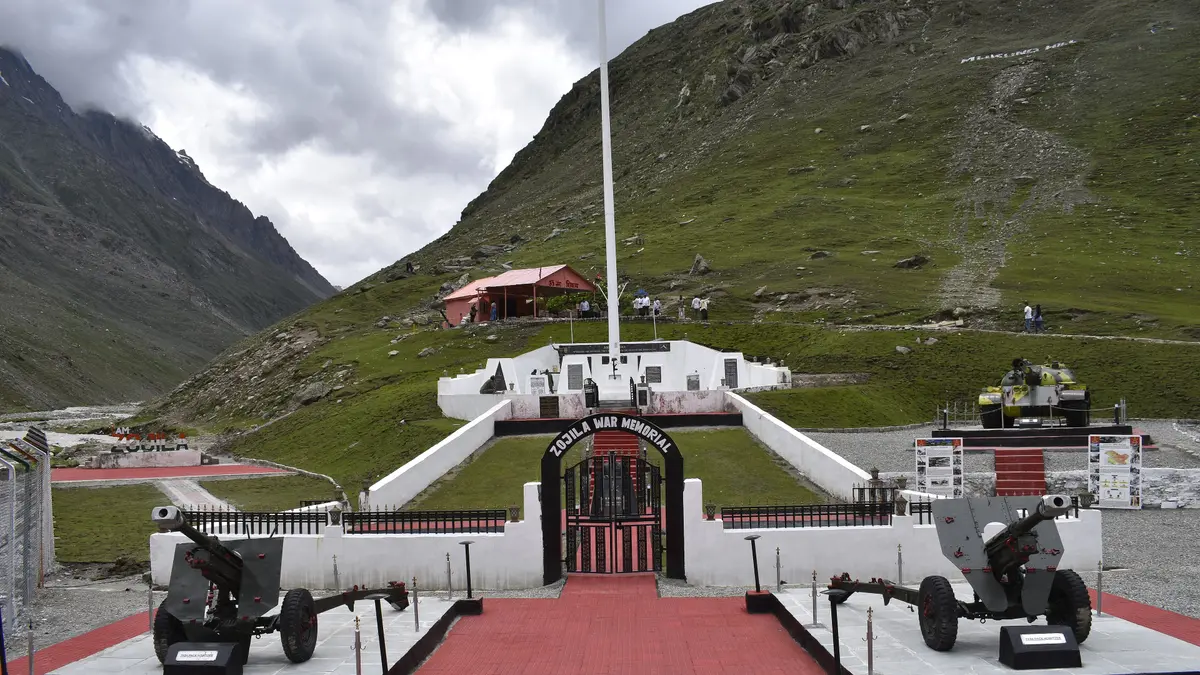
Kargil War Memorial, Drass
Drass's memorial honours soldiers who died in the 1999 Kargil conflict. The wall of names, gallery and views towards Tololing and nearby peaks make it one of the most moving stops on the route. Allow an hour. For more time in this region, including the Suru valley, read our Srinagar Kargil Leh tour guide.
Kargil to Lamayuru: where Buddhist Ladakh begins
Kargil town
The usual overnight stop. An evening walk through the bazaar and along the Suru river is the best way to see it.
Mulbekh
Beside the highway, an ancient Maitreya Buddha carved into a rock face marks the transition into Buddhist Ladakh. Small monasteries stand on the ridge above.
Namika La and Fotu La
Two passes with sweeping views. Fotu La, at around 4,100 m, is the highest point on the highway. Stop briefly for photos, but do not linger if anyone feels the altitude.
Lamayuru
One of the oldest monasteries in Ladakh, perched above the pale, eroded hills known as the Moonland. Visit the prayer hall, then walk to a viewpoint. Morning prayers, if you arrive early, are a calm and memorable experience; sit quietly at the back and follow the monks' cues. An overnight stay here is one of the best upgrades you can make to this route.
Indus valley: Alchi to Leh
Alchi
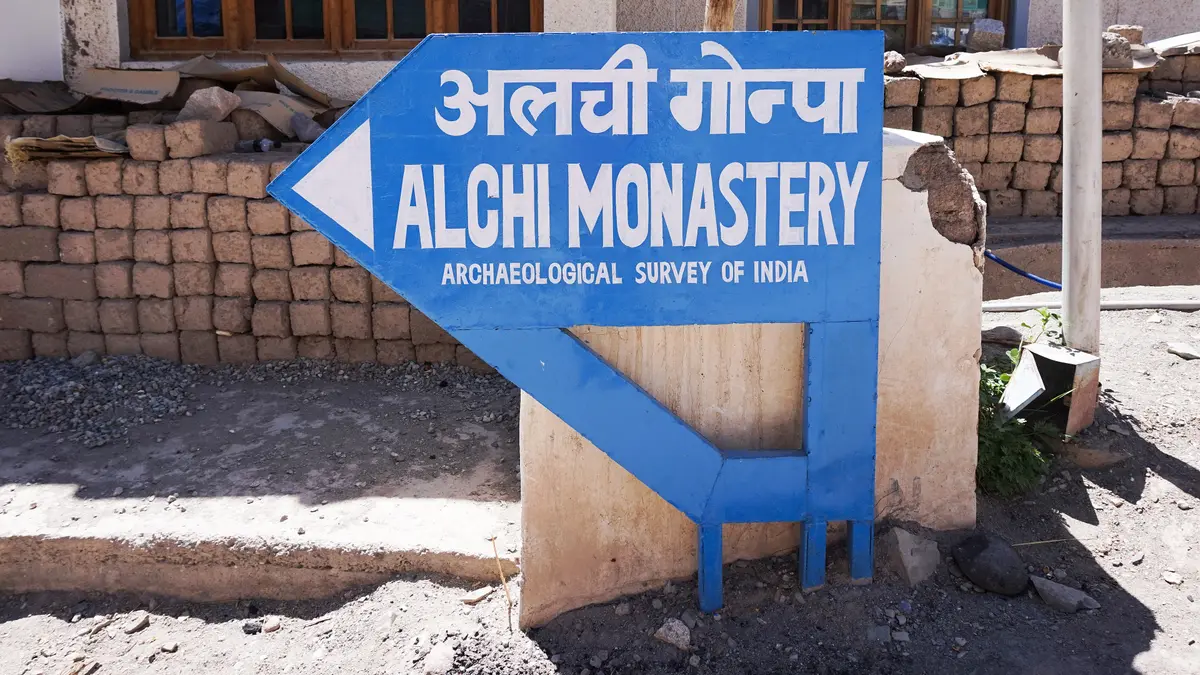
A short detour from the highway, Alchi's temple complex is famous for its centuries-old murals and wood carvings. Photography is restricted inside the old temples to protect the art.
Likir and Basgo
Likir monastery is known for its large golden Maitreya statue, while Basgo has a monastery and the ruins of a royal fort on a dramatic ridge. Visit one or both if you have time.
Nimmu confluence and Gurudwara Pathar Sahib
Near Nimmu, a viewpoint looks over the meeting of the Zanskar and Indus rivers, where the two colours of water run side by side. Further on, Gurudwara Pathar Sahib is a peaceful Sikh shrine maintained by the army. Rafting is also possible here in season; see our Srinagar Leh adventure guide.
Magnetic Hill and Hall of Fame
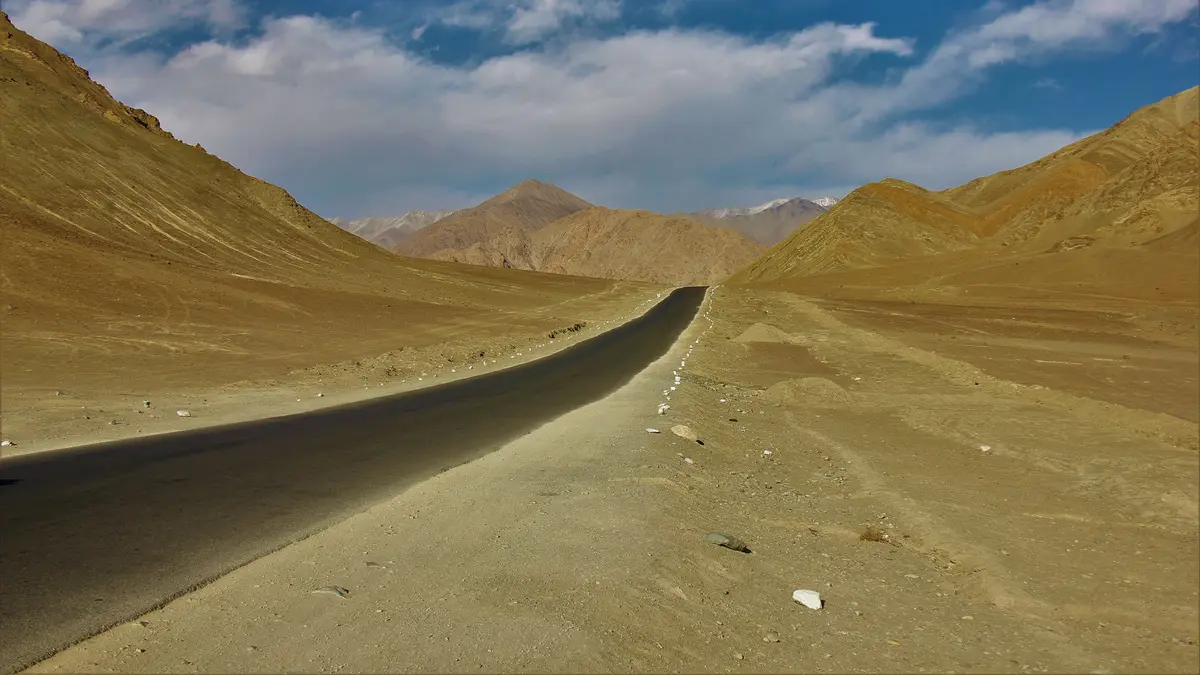
Magnetic Hill's optical illusion makes vehicles appear to roll uphill. Closer to Leh, the Hall of Fame museum covers Ladakh's history and military operations.
Srinagar Leh sightseeing by trip length
Two road days
Day one: Sonamarg breakfast stop, Zojila War Memorial, Kargil War Memorial, night in Kargil. Day two: Mulbekh, Lamayuru, the Nimmu confluence and Magnetic Hill, arriving in Leh by late afternoon. Save Alchi, Likir and the Hall of Fame for a later day trip from Leh.
Three road days
Add a night in Sonamarg or Lamayuru. With the extra time you can walk in the Thajiwas area, watch sunset over the Moonland and visit Alchi without hurrying.
Four road days
Add a full day in Kargil with the bazaar, the museum and a half-day Suru valley drive, then continue as above. This slow version suits photographers and families.
Sightseeing with children and older travellers
Choose stops with short walks and good facilities: Dal Lake, Sonamarg, the Kargil War Memorial, Mulbekh and Magnetic Hill are easy for all ages. Lamayuru and Alchi involve some steps and uneven ground, so take them slowly. Keep each stop short at high points like Fotu La, carry snacks and warm layers, and plan toilet breaks at towns such as Sonamarg, Drass, Kargil and Khalsi rather than at remote viewpoints.
Best time for sightseeing on this route
The road is usually open from about April or May to November. June offers snow scenery on Zojila and green valleys in Kashmir; July and August are busiest; September brings clear views and golden poplars in the Indus valley. Within each day, aim for mornings at the passes, when traffic is lighter and weather clearer, and afternoons in the Indus valley.
Remember that you are gaining altitude steadily. Walk slowly at Fotu La and Lamayuru, drink water at every stop and save Leh's own sightseeing for after a rest day.
Sightseeing tips and mistakes to avoid
- Do not try to see every stop in two days; choose five or six.
- Dress modestly at monasteries, mosques and gurudwaras.
- Never photograph military installations, bridges or checkpoints.
- Carry small change for entry fees and donations.
- Stop only where it is safe to pull off the highway.
Joining others for the drive? A Srinagar Leh group departure covers most of these stops in a set plan. To see how these places fit into a bigger loop from the plains, read our Delhi to Leh complete road trip guide.
Why plan with Tripsdoc
Our drivers know where to stop, for how long and when the light is best, and our itineraries leave room for unplanned moments. See our Srinagar Leh Manali package for a circuit that includes this road.
Conclusion
Good Srinagar Leh sightseeing is about choosing well, not seeing everything. Pick the stops that matter to you, give them the time they deserve and arrive in Leh rested. Browse our Leh Ladakh tour packages or contact Tripsdoc to plan your Srinagar Leh sightseeing stops.
Photo credits (Wikimedia Commons): Amolmore8999 (CC0), Vishyvishal14 (CC BY-SA 4.0), Bernard Gagnon (CC BY-SA 4.0), AKS.9955 (CC BY-SA 4.0).
Frequently Asked Questions
If you see only a few, choose Sonamarg, the Kargil War Memorial at Drass, the Mulbekh Maitreya, Lamayuru and the Indus–Zanskar confluence near Nimmu. Together they show the route's landscapes, history and cultures. Alchi is the best extra if you can spare an hour or two, especially if you enjoy art and history.
The Zojila War Memorial, on the Ladakh side of the pass, honours soldiers of the 1948 operations in which the Indian Army famously took tanks over Zojila to secure the route to Ladakh. It has displays, a statue and a well-kept memorial area. A short stop of twenty to thirty minutes is usually enough.
Most monasteries such as Lamayuru, Alchi, Likir and Basgo charge a small entry fee, which supports upkeep. Some, like Alchi, may restrict photography inside the old temples to protect the murals. Carry small change, dress modestly, remove shoes where asked and walk clockwise around prayer wheels and chortens.
Magnetic Hill is an optical illusion. The layout of the surrounding slopes makes a slight downhill section of road look like an uphill one, so a vehicle in neutral appears to roll uphill. It is a fun short stop, but there is no special magnetic force. Do not stop in the middle of the highway to test it.
Gurudwara Pathar Sahib is a Sikh shrine on the highway between Nimmu and Leh, associated with Guru Nanak and maintained by the Indian Army. Visitors of all faiths are welcome. Cover your head, remove your shoes and accept the langar or tea if offered. Most travellers spend fifteen to thirty minutes there.
Yes. A viewpoint on the highway near Nimmu looks down on the meeting of the muddy Zanskar and the blue-green Indus, which is especially clear in summer. A short road leads down towards the water, where rafting trips end in season. Allow twenty to forty minutes, longer if you walk down.
One hour is enough for the monastery and a viewpoint over the Moonland. If you can stay the night, you can watch sunset and sunrise light on the eroded hills, which is when the landscape looks most dramatic. Lamayuru is also a good lunch stop on the drive from Kargil to Leh.
The Hall of Fame near Leh, maintained by the Indian Army, has exhibits on Ladakh's history, culture and military operations, including the Kargil conflict. It is a meaningful stop, especially after visiting the Kargil War Memorial. Allow about an hour, and check timings, as it may close on some days or during certain hours.
Yes, if you arrive by midday. A shikara ride on Dal Lake, one or two Mughal gardens such as Nishat and Shalimar and a walk near Hazratbal fit well into an afternoon and evening. Keep the evening relaxed, as the drive to Sonamarg or Kargil starts early the next morning.
With only two days, skip the Suru valley detour, long stays at Alchi and Likir, and walking down to the confluence. Visit the Kargil War Memorial, Mulbekh and Lamayuru briefly on the way, and keep Magnetic Hill, the Sangam viewpoint and the Hall of Fame for a short final stretch into Leh.