Everything about joining a Manali Leh group tour: how fixed batches and private group trips work, vehicles and seating, rooms, the trip captain's role, typical costs, daily routine, group etiquette and how to choose the right batch for you.
A Manali Leh group tour is one of the easiest ways to see the Himalaya's most famous highway without planning every detail yourself. You share the vehicle, the costs and the stories with fellow travellers, while a trip captain handles the logistics. I have seen solo travellers start these trips as strangers and leave with friends for life. This guide explains how group tours work, what a typical batch looks like, approximate costs and how to choose a group that suits you. Figures are indicative and depend on season and operator.
How a Manali Leh group tour works
There are two kinds of group trips:
- Fixed-departure batches: set dates and a fixed itinerary that anyone can join. Ideal for solo travellers, couples and small groups of friends.
- Private group tours: a family, friends or office group books its own vehicle and plan. You choose dates, halts and pace.
Both usually start in Manali and end in Leh, with the option to continue to Srinagar or fly out. A typical batch runs 7–9 days, with two highway days, a rest day in Leh and visits to Nubra and Pangong. For the day-by-day structure, see our Manali Leh itinerary guide.
Vehicles, rooms and the trip captain
Vehicles
Groups of 8–12 travel in tempo travellers; smaller groups in SUVs such as Innovas or similar. Bigger batches use several vehicles in convoy. Expect luggage on the roof carrier, so pack a small day bag for the things you need on the road.
Rooms
Rooms are usually on twin or triple sharing, with same-gender sharing for solo travellers unless you pay a single supplement. At Sarchu and Pangong you will stay in camps; at Jispa and Leh, in hotels or guesthouses.
The trip captain
A trip captain travels with the group, manages timings and stays, keeps an eye on everyone's health and liaises with drivers. A good captain sets the tone for the whole trip.
Manali Leh group tour cost: what to expect
| Batch type | Typical length | Approx. cost per person |
|---|---|---|
| Budget fixed departure (tempo traveller, camps and guesthouses) | 7–8 days | ₹18,000–₹26,000 |
| Standard fixed departure (better hotels, smaller vehicles) | 8–9 days | ₹25,000–₹35,000 |
| Private group of 8–12 (own vehicle and plan) | 7–9 days | ₹22,000–₹38,000 |
Prices generally exclude travel to Manali and flights from Leh. If you want to compare a group batch with a private plan, our Manali Leh package guide explains what each style includes.
What a group batch usually includes
- Shared vehicle with driver from Manali to Leh and for sightseeing in Ladakh (often a local Ladakh vehicle after Leh).
- Twin or triple sharing stays at Jispa or Sarchu, Leh, Nubra and Pangong.
- Breakfast and dinner at stays; lunch on the road is usually extra.
- Permit assistance for protected areas such as Nubra and Pangong.
- A trip captain, basic first aid and, with many operators, oxygen support in the vehicle.
Usually excluded are travel to Manali, the flight out of Leh, lunches, entry tickets, camel rides, rafting and anything personal. Read the inclusions line by line, because two batches at the same price can differ a lot on stays and meals.
A typical day on the road
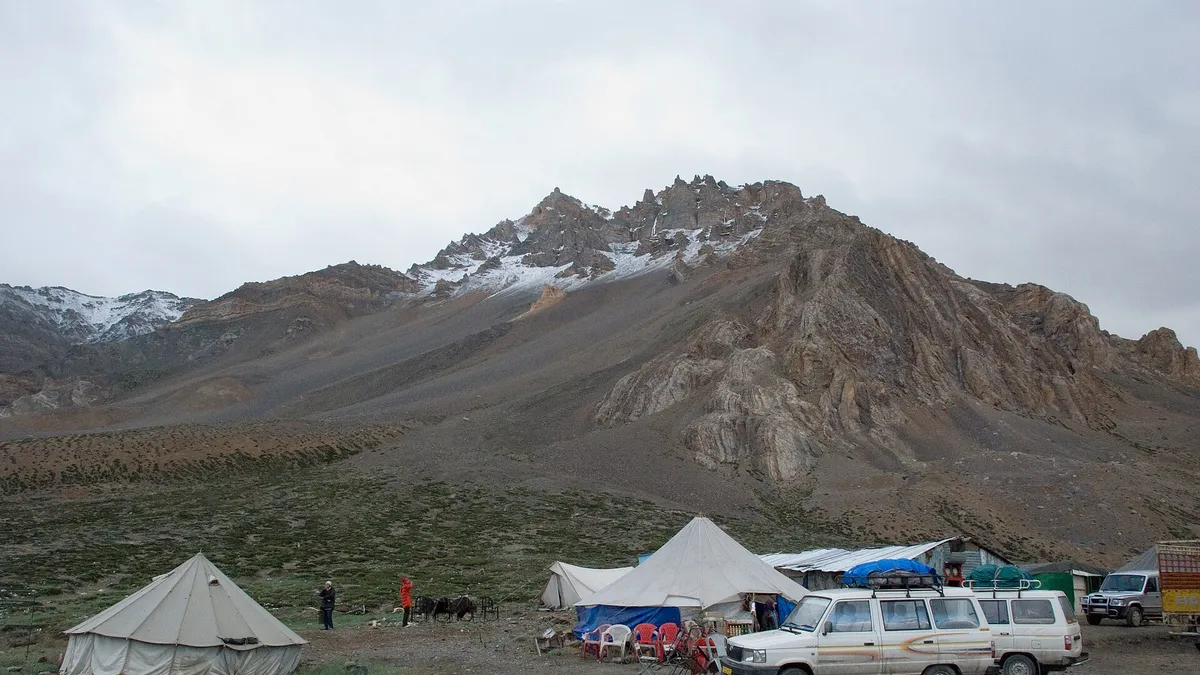
Group days start early. On highway days, expect a 5 am wake-up, tea and breakfast, and departure by 6 am. The vehicle stops every couple of hours for photographs, toilets and tea. Lunch is at a dhaba in Sarchu or Pang. The group reaches the night halt by late afternoon, and evenings are for rest, dinner and conversation. Leh days are gentler, with late breakfasts and short sightseeing outings. On a Manali Leh group tour, the shared rhythm is part of the fun: everyone is tired together, excited together and amazed together at each pass.
Making friends on the road
The first evening in Manali is usually a short meet-and-greet with the trip captain, a briefing on the route and a look at everyone's gear. By the time the group crosses Baralacha La together, the ice has broken. Shared tea at a Sarchu dhaba, cards at the camp and a cold sunrise at Pangong do the rest. If you are travelling alone and feel shy, sit at the front for the first day and offer to help with photographs; the conversations follow naturally. Many travellers I know booked their next trip with people they met on a Manali Leh group tour.
Who a group tour suits
- Solo travellers who want company and safety in numbers.
- Couples and pairs of friends who want to share costs.
- First-timers who prefer a tested plan and an experienced captain.
- Large friend or office groups booking a private batch.
A group tour may not suit you if you want complete control over timings, need special medical arrangements or prefer total privacy. In that case, a private car trip is a better fit.
Prefer to enter Ladakh from Kashmir? Our Srinagar Leh group departure guide covers batches on that route.
How to choose the right batch
- Check the first-night halt. Jispa or Keylong is gentler than Sarchu.
- Look for a rest day in Leh before Khardung La or Chang La.
- Ask about group size and age mix. A batch of 10 feels very different from one of 25.
- Read the inclusions. Permits, meals, oxygen support and the trip captain should be clear.
- Understand the cancellation policy, including what happens if the batch does not fill.
- Check the activity level. Some batches add treks or rafting; others are purely sightseeing.
Group etiquette that makes a good trip
- Be ready on time; one late start can cost the whole group daylight on the highway.
- Rotate seats so everyone gets a window.
- Keep music and conversations considerate on long drives.
- Tell the trip captain early if you feel unwell; hiding symptoms helps nobody.
- Respect local culture at monasteries and villages; ask before photographing people.
- Take your rubbish with you; the high section has no waste collection.
Best time and preparation
Fixed departures usually run from June to September, sometimes into early October. June and July batches fill quickly, so book early. September batches are smaller and the weather is clear. Pack layers, a windproof jacket, sunglasses, sunscreen, a refillable bottle and a small medical kit. Carry cash for dhabas and personal spends, as ATMs are only in Keylong and Leh on this route, and a postpaid SIM if you want network in Ladakh.
Health and altitude in a group
Groups sometimes feel pressure to keep up. Do not. Drink water, rest when needed and report headaches, nausea or breathlessness to the captain immediately. Altitude sickness can affect anyone regardless of fitness. Consult a doctor before the trip if you have a medical condition.
Why join a Tripsdoc group
We keep batches at a manageable size, choose halts that respect acclimatisation and send an experienced trip captain with every group. You get clear inclusions, named stays and a plan B for road closures. If adventure is your priority, look at our Manali Leh adventure ideas, many of which can be added to group trips.
Conclusion
A Manali Leh group tour gives you the highway, the passes and the lakes with shared costs, shared laughter and someone else handling the logistics. Pick a batch with a sensible pace, a rest day in Leh and clear inclusions, and you will come home with stories and friends. Explore our Leh Ladakh tour packages or contact Tripsdoc to find a batch that fits your dates.
Photo credits (Wikimedia Commons): Shriniwas Deshmukh (CC BY-SA 3.0), Kiran Jonnalagadda from Bangalore, India (CC BY-SA 2.0), Harvinder Chandigarh (CC BY-SA 4.0).
Frequently Asked Questions
The trip captain manages the daily schedule, coordinates with drivers and stays, handles check-ins, keeps an eye on everyone's health and makes calls on delays or route changes. On the highway they decide when to stop, when to push on and when to wait. They are your first point of contact for any problem.
Most groups rotate seats daily so everyone gets time at the front and windows. Travellers prone to motion sickness are usually given front or middle seats, which feel smoother on bends. Mention it when booking. Rotating also helps people mix and get to know each other on long highway days.
For solo travellers and couples, usually yes, because vehicle and driver costs are split among many people and operators get group rates at camps. For a family or friends group of five or six, a private vehicle can cost about the same per person while giving more flexibility. Compare inclusions, not just price.
Yes. Many groups of 8–12 friends, colleagues or relatives book an entire tempo traveller with their own dates and plan. You get the economy of a group with the privacy of a private trip. Share ages, health conditions and preferences when asking for a quote so the halts and pace suit everyone.
On a vehicle-based tour this matters less than you might think, since the vehicle sets the pace. Tell the trip captain early if you need extra rest or shorter walks at sightseeing spots. Good groups support each other. If you plan treks or activities, choose a batch whose plan matches your fitness level.
Safety comes first. If someone needs to descend or see a doctor, the trip captain arranges it, which may mean a short delay or a separate vehicle while the rest continue. That is why buffer time matters in group plans. Travel insurance helps cover any extra transport or medical costs.
Most responsible operators discourage alcohol, especially on the highway days and for the first two days in Leh, because it worsens dehydration and altitude sickness. Some allow it in moderation later in the trip. Respect the group rules and local customs, and never drink before a high pass or a long drive.
Camps and hotels on the route generally serve simple vegetarian and non-vegetarian meals. Tell the operator in advance about Jain, vegan, allergy or other needs so they can inform the stays. On highway days, dhaba menus are short, so carry snacks you know you can eat.
Yes. Most batches officially start in Manali, so you can reach there by your own bus, car or flight to the nearest airport. Arrive a day early if possible, both to avoid missing the early start and to give your body a little time at Manali's altitude before the tunnel.
The route is the same, but large groups need more vehicles, a clear chain of contact, rooming lists and sometimes a second trip captain. Corporate groups may want a fixed briefing, team activities or specific hotel standards. Share your group size and goals early so stays and vehicles can be reserved together.