A practical Manali Leh bike trip planner: choosing and renting the right motorcycle, riding gear and spares, the long no-fuel stretch, a five-day ride plan with halts, water crossings and how to stay safe at altitude.
A Manali Leh bike trip is on almost every Indian rider's list, and for good reason. In about 425 to 430 km you cross some of the highest passes in the country, ride across the More Plains and drop into the Indus valley at Leh. What decides whether the ride is memorable or miserable is not courage but preparation: the right bike, the right gear, a fuel plan and a sensible daily schedule. This guide focuses on exactly that.
Manali Leh bike trip at a glance
| Detail | What to expect |
|---|---|
| Distance | About 425–430 km via the Atal Tunnel (approx.) |
| Riding days | 2 days minimum, 3–5 days recommended |
| Highest point | Tanglang La, around 5,300 m |
| Season | Usually June to late September; opening dates vary every year |
| Longest no-fuel stretch | Tandi to Karu, roughly 365 km |
| Main halts | Jispa, Sarchu, Pang (tents in season), Leh |
If you want the full trip overview, including where to stay and what to see, read our Manali to Leh travel guide. Below we stay with the riding side.
Choosing and renting the right motorcycle
Manali has dozens of rental agencies, and rates usually run approx. ₹1,500–₹2,500 per day for a 350–450 cc bike in peak season, plus a refundable deposit. The bike matters less than its condition and your ability to handle it when it is loaded and on loose gravel.
Popular choices
- Royal Enfield Himalayan: long-travel suspension and good ground clearance, comfortable on broken roads and water crossings.
- Royal Enfield Classic 350: the most common rental, with spares and mechanics in almost every town.
- Lighter 200–250 cc adventure bikes: easier to pick up and manoeuvre, a good option for smaller or less experienced riders.
Checks before you sign
- Tyres with good tread, brake pads, chain slack and both cables.
- Registration, insurance and pollution papers, plus a written rental agreement.
- Whether the bike may legally go beyond Leh to Nubra, Pangong and other valleys.
- Who pays for breakdown recovery, and whether one-way drop in Leh is allowed.
Take photos and a video of the bike, including existing scratches, before you ride out.
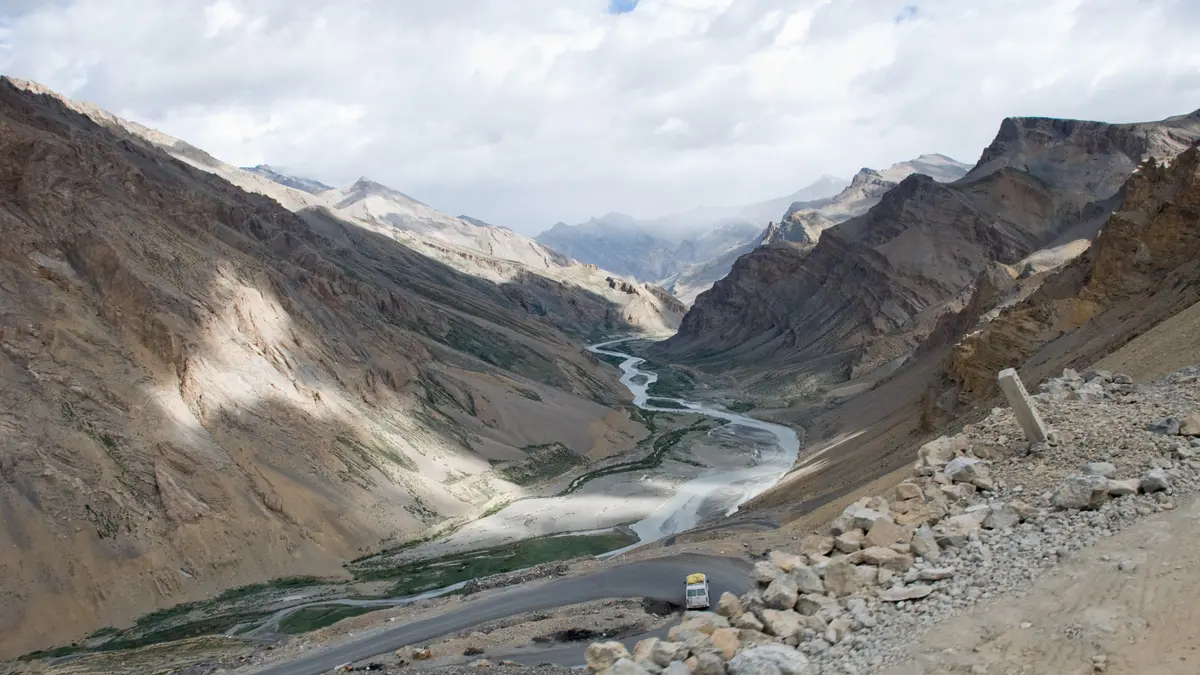
Riding gear and spares checklist
Temperatures can swing from warm in the Kullu valley to near freezing on Baralacha La or Tanglang La in the same day. Dress in layers you can add and remove at the roadside.
- Protection: full-face helmet, armoured jacket, riding pants or knee guards, and over-the-ankle boots.
- Weather: waterproof gloves and rain cover, thermal inner layers, a balaclava and a neck warmer.
- Visibility: sunglasses or a tinted visor insert, and a reflective vest for dusty stretches.
- Spares: clutch and accelerator cables, tube or puncture kit, mini pump, spark plug, fuses, chain lube, zip ties and tape.
- Luggage: saddlebags or a tail bag with waterproof liners and bungee cords; keep weight low and centred.
Fuel plan: the Tandi to Karu gap
The Tandi pump, close to Keylong, is traditionally the last reliable fuel stop before Karu or Upshi, roughly 365 km later. On a single-cylinder bike with a 13–15 litre tank, that distance is beyond one tank once you add climbs, loops and headwinds.
- Fill the tank at Tandi and carry 10–15 litres extra in approved jerry cans.
- Strap cans low and away from the exhaust.
- Track consumption on the first day so you know your real range at altitude.
- Some camps sell fuel in bottles at high prices; treat this as an emergency option only.
New fuel points open on the highway from time to time, so check the latest information in Manali, but plan as if there are none.
A five-day Manali Leh bike trip ride plan
Riding it in two days is possible, but three to five days is much kinder on both rider and machine, and gives your body time to adjust to the altitude.
| Day | Ride | Approx. distance | Notes |
|---|---|---|---|
| 1 | Manali to Jispa via Atal Tunnel, Sissu and Keylong | ~95 km | Short day to shake down the bike; fuel at Tandi |
| 2 | Jispa to Sarchu via Darcha, Deepak Tal and Baralacha La | ~85 km | First high pass; watch for water crossings after Zing Zing Bar |
| 3 | Sarchu to Pang via Gata Loops, Nakee La and Lachung La | ~75 km | Rough patches and sand near Pang; stay only if you feel well |
| 4 | Pang to Leh via More Plains, Tanglang La, Upshi and Karu | ~175 km | Longest day; refuel at Karu |
| 5 | Rest day in Leh | – | Service the bike, hydrate, light walks only |
Pang sits at around 4,600 m, which is high for a night's sleep. Many riders prefer Sarchu to Leh in one long day instead. Our Manali Leh road condition guide explains which stretches slow you down and why.
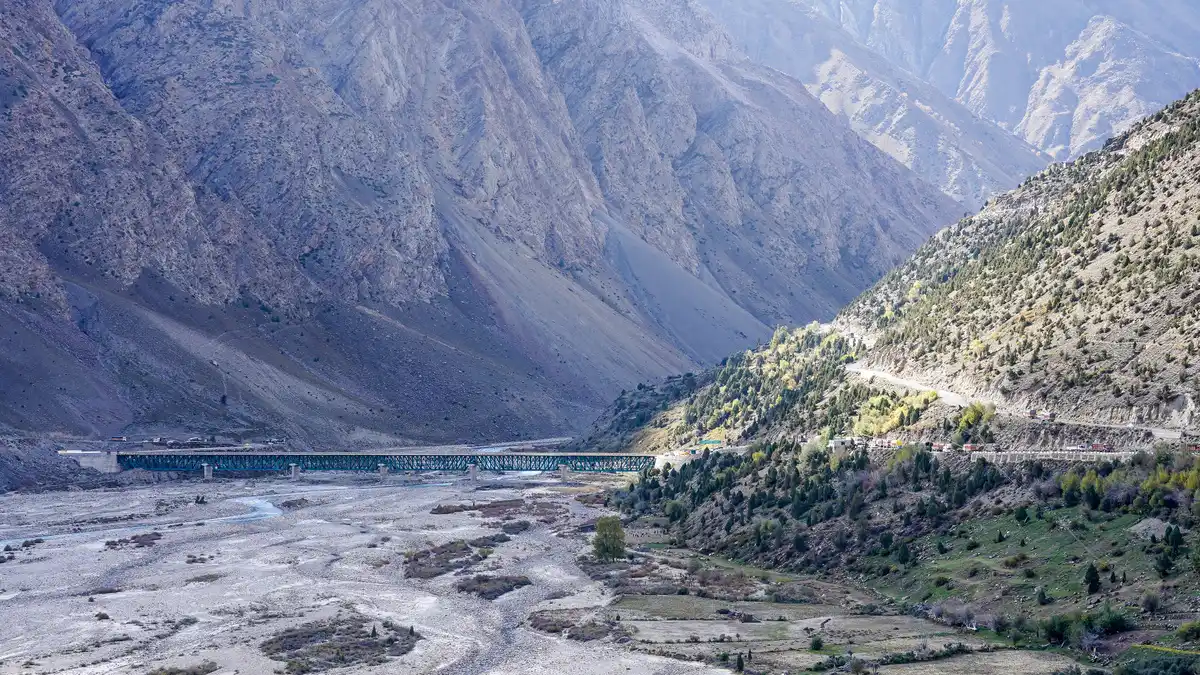
Riding technique for high-altitude roads
Gravel, sand and broken tarmac
Stand on the pegs on rough sections, grip the tank with your knees and keep a light hand on the bars. Use the rear brake more than usual on loose surfaces, and avoid sudden inputs.
Water crossings
Cross early in the day when glacier melt is lower. Pick a line, stay in first gear, keep the throttle steady and look at the exit. Walk deep crossings first if it is safe.
Hairpins and trucks
Give way to trucks and army convoys on narrow bends, and use your horn on blind corners. Never overtake on the inside of a hairpin.
Best time and acclimatisation for riders
The road usually opens around late May or June and stays open until about late September or early October, depending on snow. June has snow walls and more water crossings; July and August can bring rain and landslides in Lahaul; September is often the clearest month but colder at night.
Riding is physical work, which makes altitude sickness more likely. Spend a night in Manali before starting, keep climbing gradual, drink plenty of water, avoid alcohol and sleep lower when you can. Headache with nausea, unusual breathlessness or confusion are signals to stop and descend.
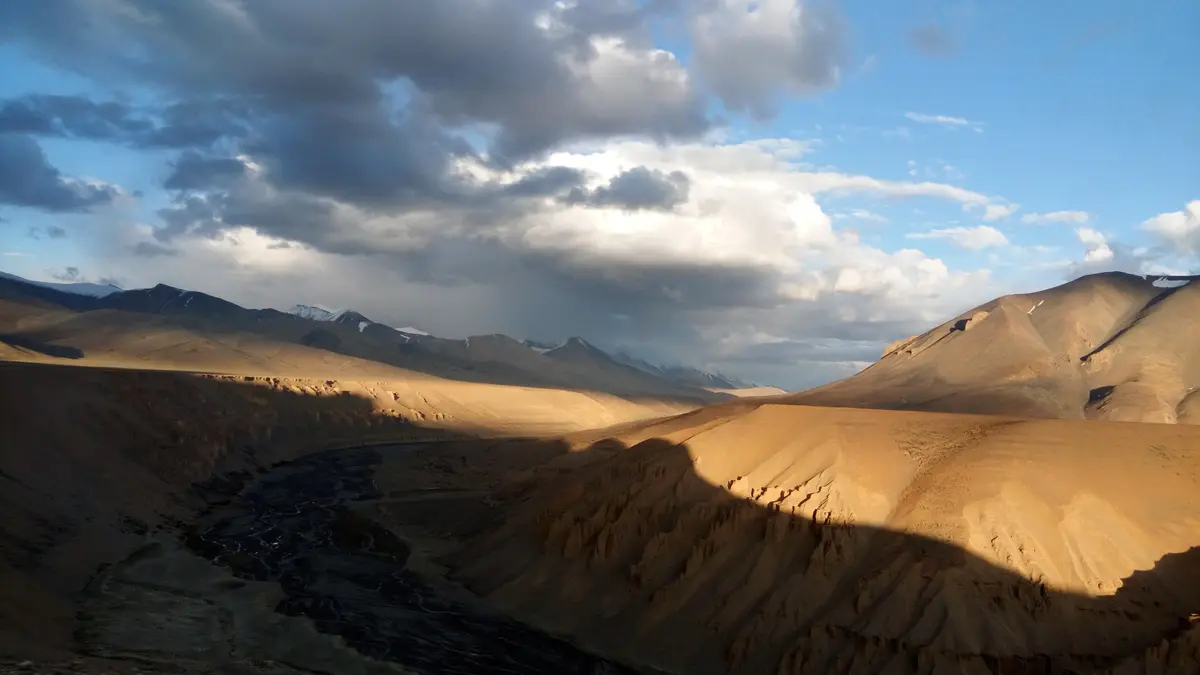
If something goes wrong on the road
Breakdowns and punctures are part of almost every ride, and they are rarely serious if you stay calm. Move the bike well off the road, switch on hazard lights if you have them and put on a warm layer immediately, because you cool down fast when you stop at altitude. Simple jobs such as a cable swap or a puncture are best done yourself if you have practised. For anything bigger, wave down a truck or taxi heading to the next camp; drivers on this road are generally helpful. Keep your rental agency's number written down, not just saved on the phone, since there may be no signal where you stop.
Common mistakes on this ride
- Starting without having ridden a loaded bike on gravel.
- Skipping the fuel top-up at Tandi.
- Riding into the afternoon, when crossings swell and light fades.
- Pushing on with altitude symptoms to keep to schedule.
- Not checking whether the rental bike is allowed beyond Leh.
Watching your spend? Our Manali Leh budget trip post breaks down costs. If you prefer the gentler western approach to Ladakh, the Srinagar Leh adventure guide covers riding and other activities on that side.
Why ride with Tripsdoc
A guided ride removes the logistics that cause the most stress. Our Manali Leh bike trip package page lists the current route and inclusions, typically with planned halts, a backup vehicle that can carry luggage and tired riders, and help with bikes and permits. You still ride every kilometre yourself, with someone watching your back.
Final thoughts on your Manali Leh bike trip
Get the bike checked, pack layers and spares, plan fuel around the Tandi to Karu gap and give yourself more days than you think you need, and your Manali Leh bike trip will be the ride you talk about for years. For more detail on the riding route itself, see our Manali to Leh by bike guide. Browse our Leh Ladakh tour packages for guided departures, or contact Tripsdoc to plan your ride.
Photo credits (Wikimedia Commons): Ashwin Kumar from Bangalore, India (CC BY-SA 2.0), Kiran Jonnalagadda from Bangalore, India (CC BY-SA 2.0), This Photo was taken by Timothy A. Gonsalves. Feel free to use my photos, but please mention me as the author. I would much appreciate if you send me an email tagooty@yahoo.com or write on my talk page, for my information. Please contact me before commercial use. Please do not upload an edited image here without consulting me. I would like to make corrections only at my own source to ensure that the changes improve the image and are preserved.Otherwise you may upload an edited image with a new name. Please use one of the templates derivative or extract. (CC BY-SA 4.0), Lalitgupta isgec (CC BY-SA 4.0).
Frequently Asked Questions
Most riders pick a Royal Enfield Himalayan or Classic 350 because spares and mechanics are easy to find along the route. The Himalayan handles broken roads and water crossings better thanks to its suspension and ground clearance. If you are a lighter or newer rider, a smaller, lighter bike you can pick up yourself is often the safer choice.
A beginner can do it with preparation, but it should not be your first long ride. Practise riding on gravel, climbing hairpins and crossing shallow water before you go. Joining a guided group with a backup vehicle and a mechanic is the safest way to start, because you can ride in the vehicle on a bad day.
Rules for outside-registered rental bikes entering Ladakh have changed several times, and local taxi unions have opposed them in the past. Before booking, ask the rental agency in writing whether their bike is allowed to ride beyond Leh to Nubra and Pangong, and carry the registration, insurance, pollution certificate and rental agreement.
Plan for the roughly 365 km gap between the Tandi pump near Keylong and the next reliable pumps near Karu, and carry ten to fifteen litres in approved jerry cans depending on your bike. Fill up again at Tandi even if your tank looks full. Fuel sold in bottles at camps is costly and of unknown quality.
Carry a clutch cable and accelerator cable, spare tube or puncture kit with a small pump, spark plug, fuses, chain lube, a basic tool kit, zip ties, duct tape and a tow rope. Learn how to fix a puncture before you leave Manali. Rental agencies usually supply some spares, so check the list when you collect the bike.
Stop and look first, ideally watching another vehicle go through. Cross early in the morning when meltwater is lower, stay in first gear with steady throttle, keep your feet on the pegs and look ahead, not down. Never stop in the middle. If the water is fast or deeper than your footpegs, wait for it to drop.
Yes, many Manali rental shops rent helmets, riding jackets, knee and elbow guards and gloves along with bikes. Rented gear is fine for a single trip, but always check helmet fit and certification. Bring your own waterproof gloves, thermal layers and a balaclava, because these are personal items that make the biggest difference to comfort.
Around 150 to 250 km a day is plenty on this road. Average speeds are low because of broken sections, loops and traffic, and fatigue builds quickly above 4,000 m. Aim to reach your halt by mid-afternoon, when water crossings swell and the light starts to fade. Long days are when most mistakes happen.
Pillion riding for six to eight hours on rough roads at altitude is tiring and cold, and the extra weight makes the bike harder to handle on gravel. If you travel as a couple, consider a group with a backup vehicle so the pillion can switch to the car on long or bad stretches. Both riders need full protective gear.
Some agencies allow one-way returns or arrange transport of the bike back for an extra charge, while others insist on a round trip. Confirm this before paying the deposit and get the drop-off location in writing. Many riders ride back to Manali or continue to Srinagar, so ask about all three options while comparing rental quotes.